
See a Demo
You're just one step away from seeing Call Loop in action.
Enter your information below to watch a demo right now.

You're just one step away from seeing Call Loop in action.
Enter your information below to watch a demo right now.

The market for customer engagement has shifted dramatically in recent years. What was once a niche of specialized tools has expanded into a massive global category. One recent forecast placed the customer engagement software market at USD 27.12 billion in 2025, projecting growth to USD 60.68 billion by 2034 at a 9.36% CAGR Market Research Future. Another estimate valued the market at USD 29.39 billion in 2025, expected to reach about USD 86.39 billion by 2035. These figures reflect a fundamental shift: businesses can no longer rely on generic outreach. Customers expect personalized, timely communication across their preferred channels—from SMS and voice to email and social media.
A major driver of this shift is mobile-first behavior. In 2025, SMS marketing reported a 98% open rate and a 45% response rate, compared to roughly 6% for email TXTImpact. Also, 84% of customers opted in to receive business texts in 2025, while 66% of businesses were already using SMS marketing. This data underscores why the best customer engagement platforms must now prioritize multi-channel orchestration, real-time personalization, and strong compliance frameworks.
Choosing the wrong platform can lead to wasted resources, disjointed experiences, and serious compliance risks, especially for regulated industries like healthcare. Options range from all-in-one enterprise suites to specialized tools for specific verticals like healthcare or ecommerce. If you are also exploring proven strategies to improve customer engagement, match those tactics to appropriate software. Consider the top 12 platforms, focusing on core strengths, ideal use cases, and practical limitations.
Before diving into the full list, here is a quick guide to help you identify the right fit based on your primary operational needs:
In our review, the clearest differentiator among these platforms was not just feature count, but the alignment of channel coverage, personalization depth, and operational fit. We evaluated each solution against several critical criteria:
Platforms that lacked transparency in pricing, failed to support essential compliance requirements, or were overly complex for their target audience were downgraded in our rankings. What stood out when comparing pricing models was the wide variance between transparent, usage-based platforms and those requiring expensive enterprise consultations.
Call Loop carves out a unique and powerful niche among the best customer engagement platforms by unifying three distinct outbound channels: SMS/MMS, voice broadcasting, and ringless voicemail. This integrated approach allows businesses to orchestrate advanced, multi-touch campaigns that capture attention in ways email or single-channel messaging cannot. It moves beyond basic texting to provide a full suite of tools for proactive, scalable outreach.
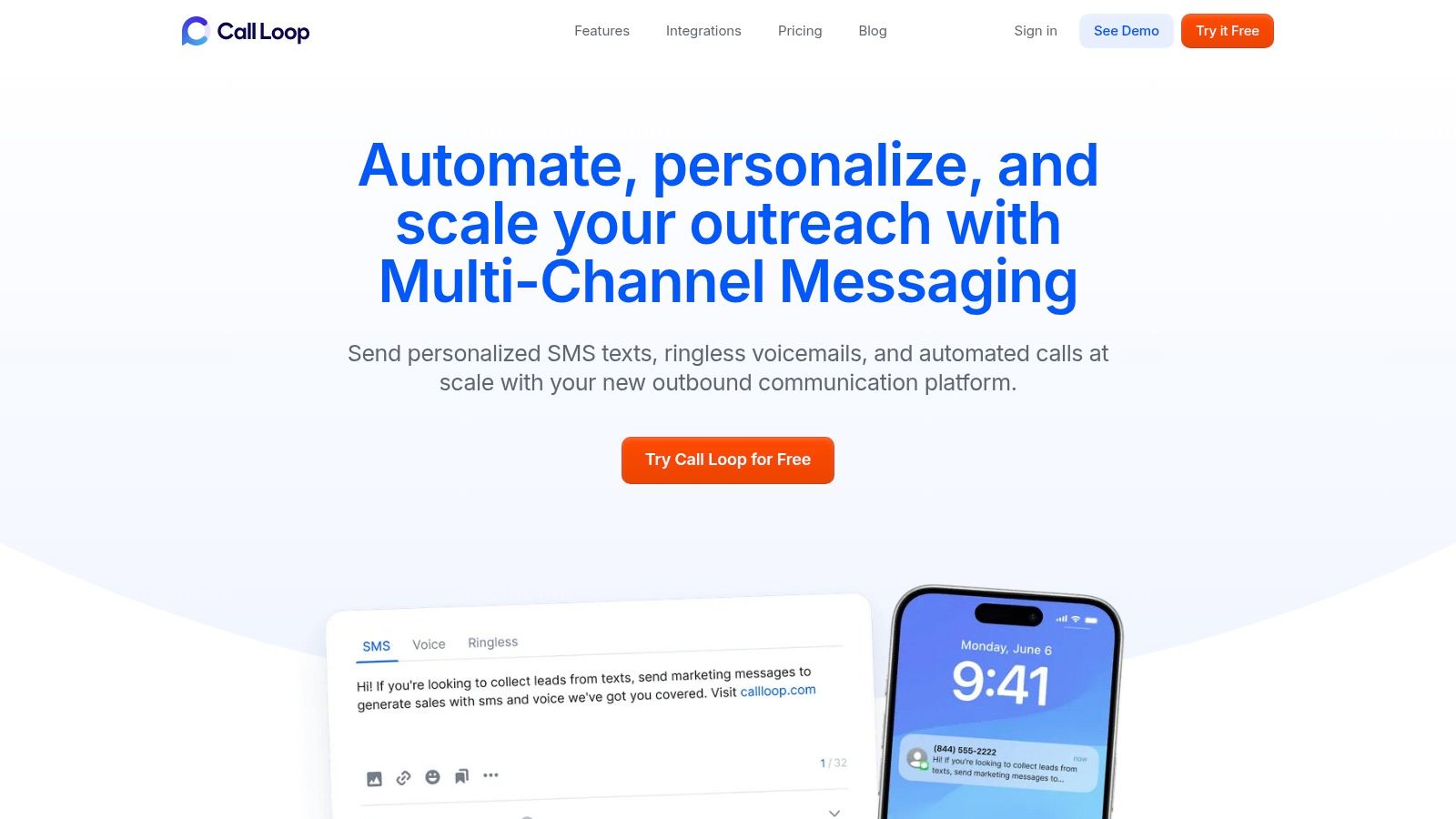
The platform excels at delivering time-sensitive, high-impact messages through an omnichannel lens. For example, an ecommerce store can send an SMS flash sale alert, follow up with a personalized ringless voicemail about an abandoned cart, and then use a voice broadcast to announce last-call savings. This multi-pronged strategy dramatically increases engagement likelihood. Its deep integration with over 4,000 apps via Zapier, including major CRMs like HubSpot and Keap, ensures it slots directly into existing marketing workflows. For teams exploring broader promotional strategies, services like Crescade can complement these outreach efforts by enhancing social ad targeting alongside direct customer messaging.
Call Loop is particularly strong for SMBs, marketing agencies, and healthcare providers who need direct, proactive outreach capabilities. Its ringless voicemail feature is a standout differentiator, allowing businesses to leave pre-recorded messages without triggering a ring—a powerful tool for appointment reminders, recall notices, and promotional campaigns. Its HIPAA-compliant framework enables secure patient communications, such as appointment confirmations and test result notifications, making it a top choice for regulated industries.
Call Loop offers a free trial. Its pricing model is primarily usage-based, with SMS credits and a pay-per-successful-drop model for ringless voicemail. For high-volume users, a consultation with their sales team is recommended to tailor a plan. This model offers more predictability for targeted voice campaigns compared to the opaque, enterprise-heavy pricing of many competitors.
Built-in features like number validation, link shortening, click tracking, and DNC list management help ensure messages land in the inbox while adhering to TCPA regulations. For healthcare, its HIPAA compliance is a critical advantage. However, users must be diligent in understanding regional laws governing ringless voicemail. The ease of combining voice, SMS, and ringless voicemail in one dashboard is the most compelling factor for agencies managing multiple client campaigns.
| Pros | Cons |
|---|---|
| Unified Multi-Channel Outreach: Manage SMS, voice, and ringless voicemail from one dashboard. | Pricing Complexity: The pay-per-use model for voice can be difficult to forecast without a sales consultation. |
| Strong HIPAA & TCPA Compliance: Critical for healthcare and regulated industries. | Ringless Voicemail Regulations: Users must be diligent in understanding regional laws. |
| Deep Integrations: Connects with thousands of apps via Zapier. | |
| Proven Results: Trusted by over 45,000 users with documented ROI. |
Website: https://www.callloop.com
Salesforce Marketing Cloud Engagement is an enterprise-grade platform designed for complex, cross-channel customer journey orchestration. It excels at unifying customer data from various Salesforce clouds (Sales, Service, Commerce) to create highly personalized interactions across email, SMS, mobile push, and social media. This deep integration with the Salesforce ecosystem makes it one of the best customer engagement platforms for mid-market to enterprise organizations already invested in Salesforce.
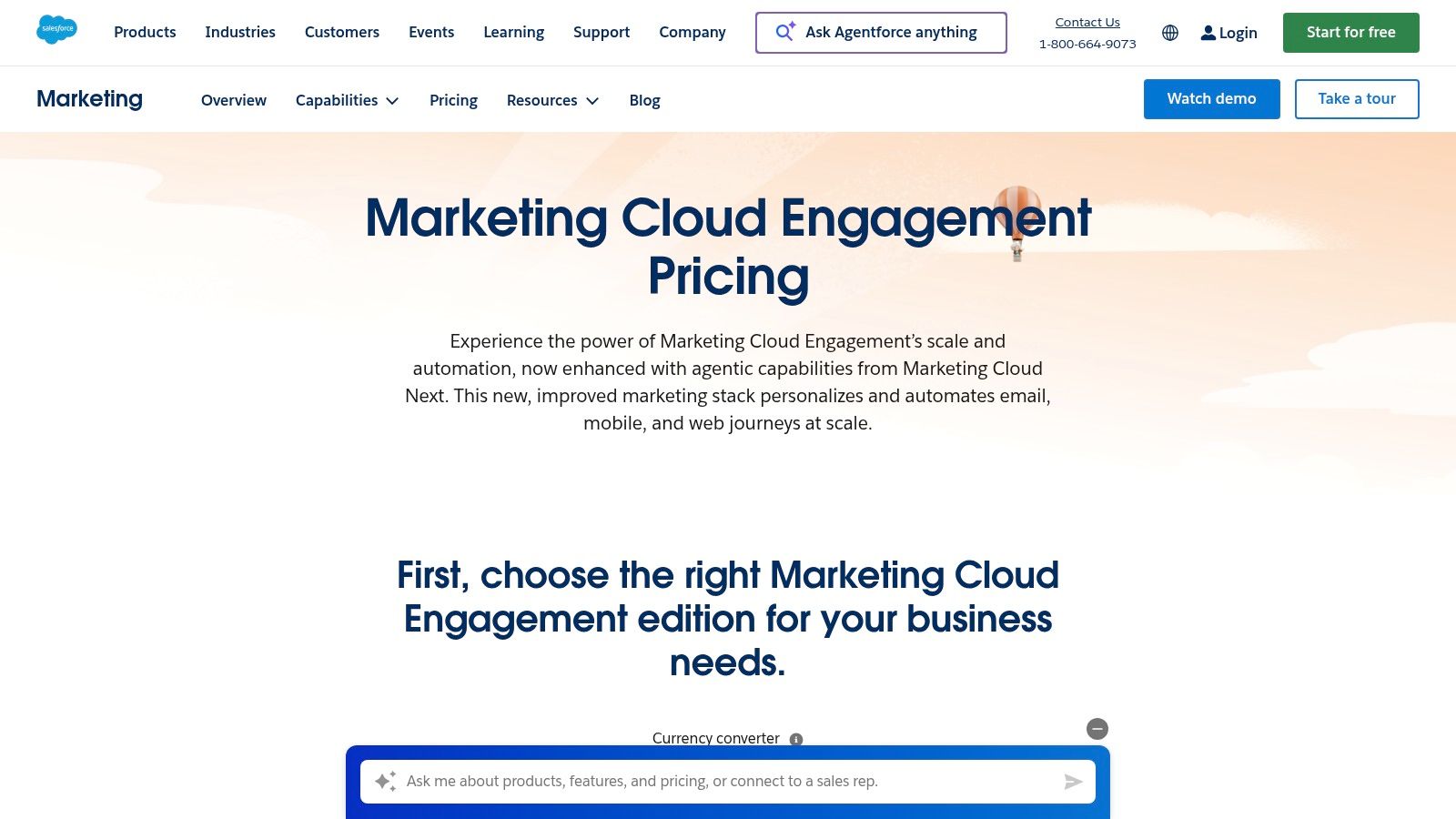
Its core strength lies in Journey Builder, an advanced tool for visualizing and automating customer paths. The platform leverages Einstein AI to optimize send times, recommend content, and manage engagement frequency. For large enterprises, the ability to tie marketing actions directly to sales and service data within the Customer 360 profile is unmatched. However, this power comes with significant complexity; implementation often requires certified partners, and the overall cost can be substantial once licensing, implementation fees, and success plans are factored in.
Plan for a significant implementation period and budget for a certified implementation partner for best results. The platform's depth requires dedicated resources to manage data hygiene, segmentation, and campaign deployment effectively. For businesses seeking more straightforward marketing automation, you can explore various solutions for automated campaigns.
Pricing is divided into editions like Pro, Corporate, and Enterprise, and is often quote-based. This opacity makes it challenging for SMBs to evaluate fit without direct sales engagement. It is best suited for organizations with dedicated engagement marketing teams and substantial budgets who need enterprise-scale governance and personalization.
| Pros | Cons |
|---|---|
| Unmatched scale and ecosystem | High complexity and steep learning curve |
| Deep, native Salesforce CRM integration | Pricing is often opaque and expensive |
| Extensive partner marketplace (AppExchange) | Requires specialized expertise to manage |
Website: www.salesforce.com
Braze is a purpose-built customer engagement platform renowned for its real-time, cross-channel messaging and powerful mobile-first capabilities. It enables consumer brands to ingest and act on customer data instantly, delivering highly relevant and contextual interactions across email, SMS, push notifications, and in-app messages. The platform is designed for agility, making it one of the best customer engagement platforms for marketing teams focused on rapid experimentation and lifecycle automation.
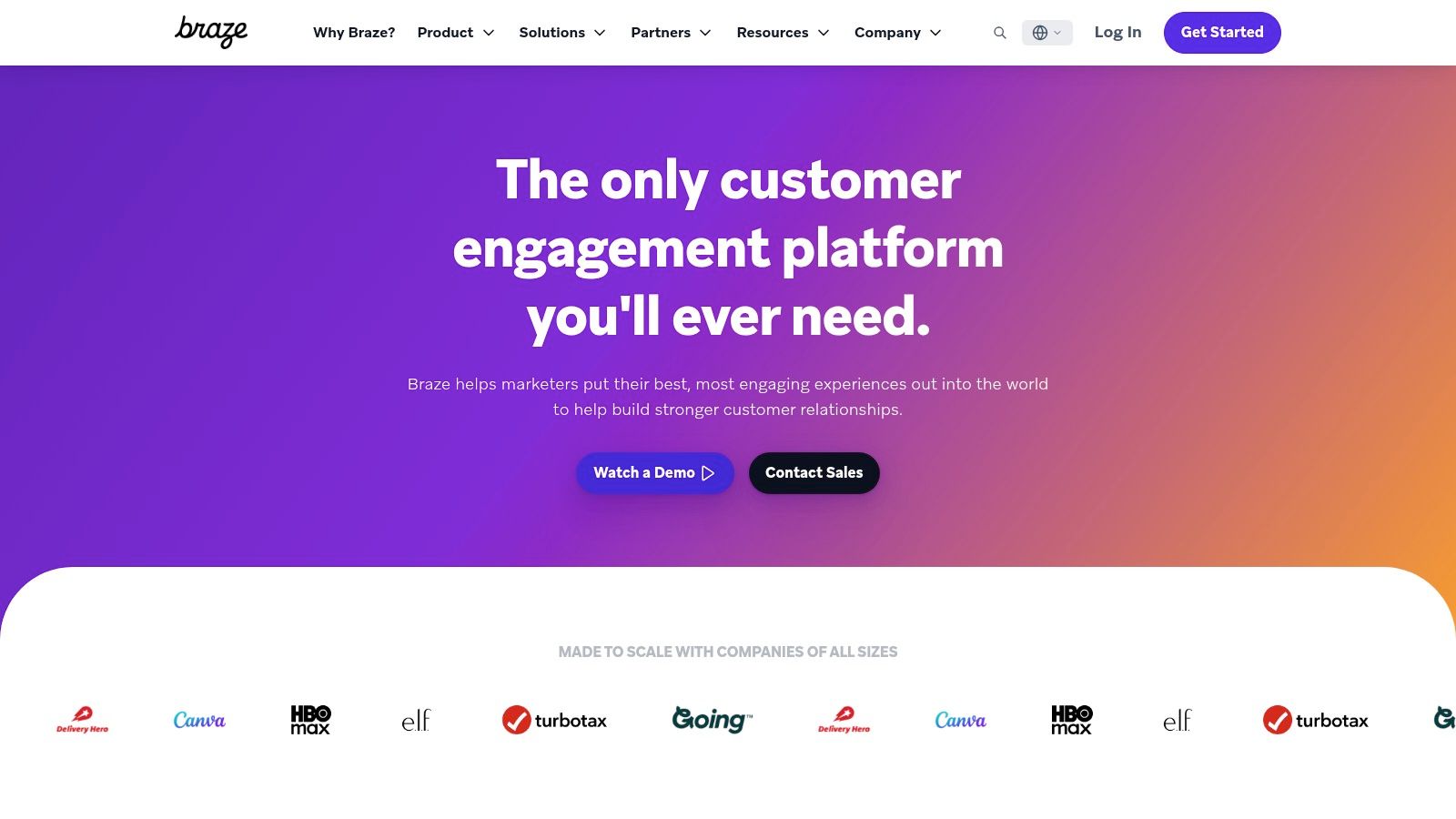
Its core strength is Canvas Flow, an intuitive journey builder that allows marketers to visually orchestrate complex user paths with A/B testing and multivariate branches. Braze also integrates a suite of AI tools to optimize messaging timing, personalization, and channel selection. While its user-friendly interface empowers marketers, its pricing is quote-based and can become a significant investment as message volumes and data points scale. It is best suited for organizations with dedicated engagement marketing teams who can make full use of its advanced feature set.
For simple use cases or small teams without dedicated technical resources, Braze can be overly complex. Its pricing model, while flexible, lacks the transparency of usage-based platforms like Call Loop or Klaviyo, making cost forecasting difficult for growing businesses.
| Pros | Cons |
|---|---|
| Marketer-friendly UI for rapid testing | Pricing is by quote and can rise with volumes |
| Proven reliability at very high message volumes | Best fit for teams with dedicated lifecycle marketers |
| Strong mobile and app-focused capabilities | Can be overly complex for simple use cases |
Website: https://www.braze.com/product/overview
Adobe Journey Optimizer is Adobe’s enterprise-grade solution for real-time journey orchestration and experimentation. Built on the powerful Adobe Experience Platform, it is designed for large organizations integrated into the Adobe Experience Cloud. The platform excels at using unified customer profiles to deliver personalized, omnichannel experiences, making it one of the best customer engagement platforms for enterprises committed to Adobe’s marketing and analytics ecosystem.
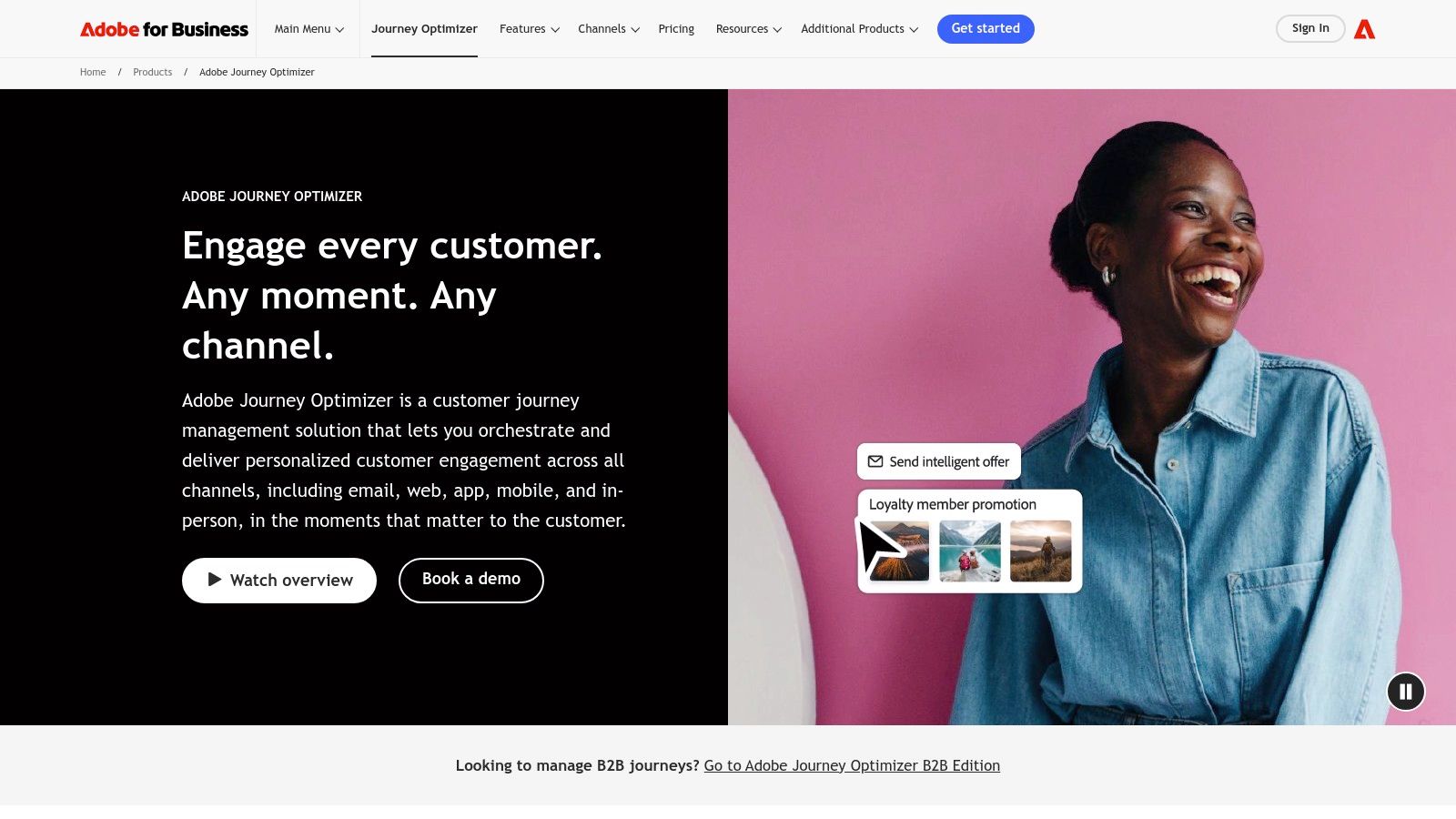
Its core advantage lies in its ability to use AI for real-time decisioning and journey design. This allows marketers to orchestrate complex interactions across both online and offline channels with precision. The platform's built-in content tools and native integration with Adobe Assets and Adobe Target enable integrated creative and testing workflows. However, this power is not for everyone; it requires adoption of the Adobe Experience Platform and a significant, enterprise-oriented onboarding process.
Full implementation is complex and resource-intensive, requiring a dedicated team and likely the support of Adobe Professional Services or a certified partner. Pricing is entirely quote-based and aimed at large-scale deployments, placing it out of reach for most small to mid-sized businesses. It is strictly for enterprises already invested in the Adobe stack.
| Pros | Cons |
|---|---|
| Unified profiles and governance at enterprise scale | Requires Adobe Experience Platform and enterprise onboarding |
| Deep creative and content workflow tie-ins | Pricing is quote-based and aimed at large enterprises |
| Offers B2B and B2C editions for tailored use cases | High complexity and significant initial investment |
Website: business.adobe.com
Iterable is a cross-channel marketing platform designed for speed and flexibility, enabling growth and lifecycle teams to create unified customer experiences. It activates real-time data to power personalized campaigns across email, SMS, mobile push, and in-app messaging. By providing marketer-friendly workflows and embedded AI, Iterable stands out as one of the best customer engagement platforms for teams focused on rapid experimentation and iteration without heavy reliance on technical support.
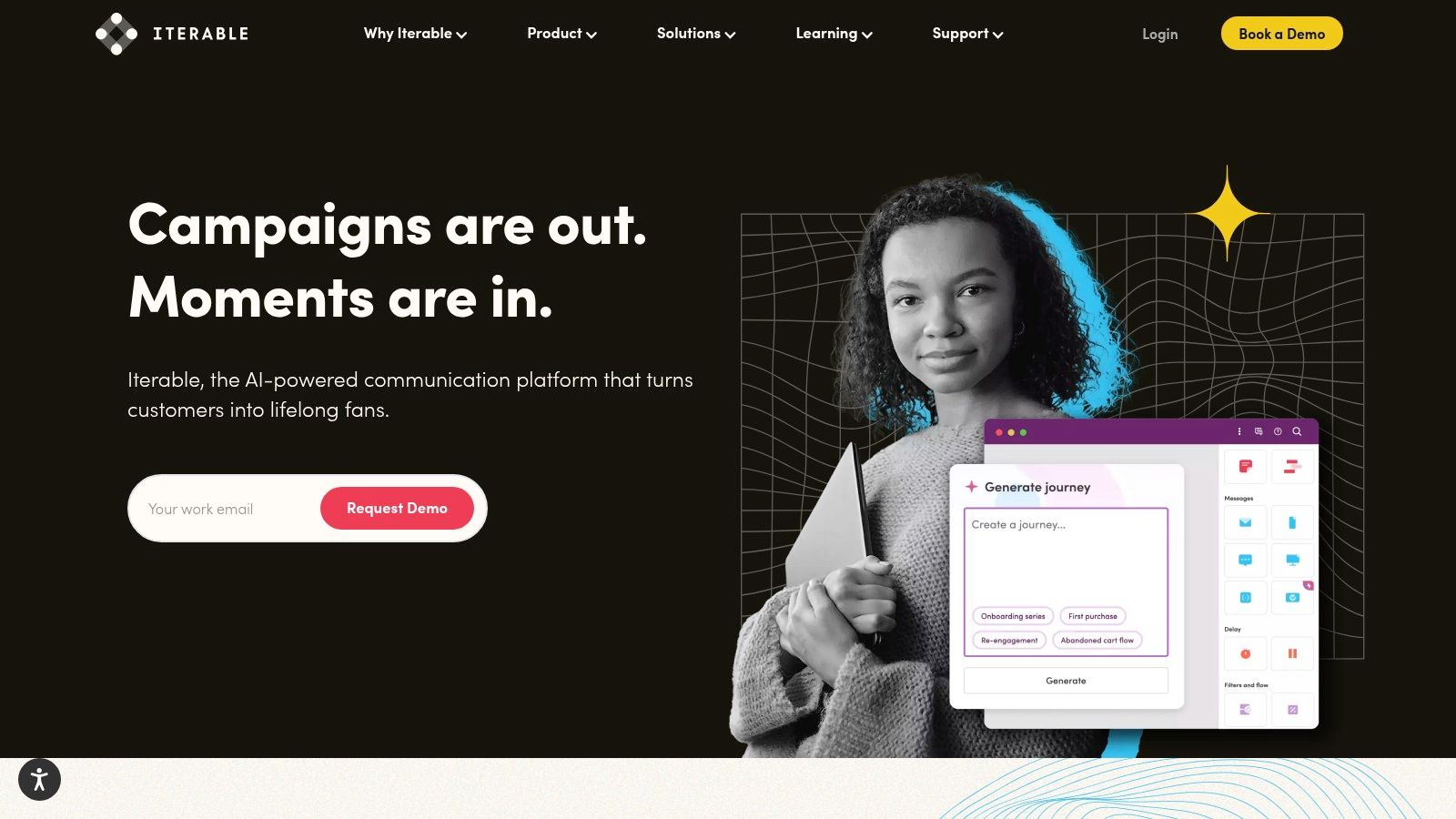
The platform's core is its ability to ingest data from any source, including data warehouses, via its Smart Ingest feature, making customer information immediately actionable within its drag-and-drop journey builder. Its AI suite assists with optimizing send times, channels, and even copy to maximize impact. While this combination of power and usability is a major draw, the pricing is not publicly available and varies based on contact volume and feature add-ons.
Unlocking its most advanced capabilities may require dedicated technical resources to ensure proper data hygiene and integration. For small businesses with simple needs, Iterable can become complex. It is best suited for mid-market to enterprise growth teams with dedicated marketing and data resources.
| Pros | Cons |
|---|---|
| Fast time-to-value for experimentation | Pricing not publicly listed; varies by volume and add-ons |
| Strong documentation and support resources | Advanced features may require technical resourcing for data hygiene |
| Good balance of power and usability for growth teams | Can become complex for very small businesses with simple needs |
Website: https://iterable.com
HubSpot is an all-in-one CRM platform that combines marketing, sales, customer service, and content management into a single, unified system. Its strength lies in its approachability and scalability, offering a free tier that allows businesses to start small and add functionality as they grow. This makes it one of the best customer engagement platforms for small to medium-sized businesses looking for a solution that can expand with their needs. The platform centralizes customer data, enabling personalized communication across channels like email, live chat, and forms.
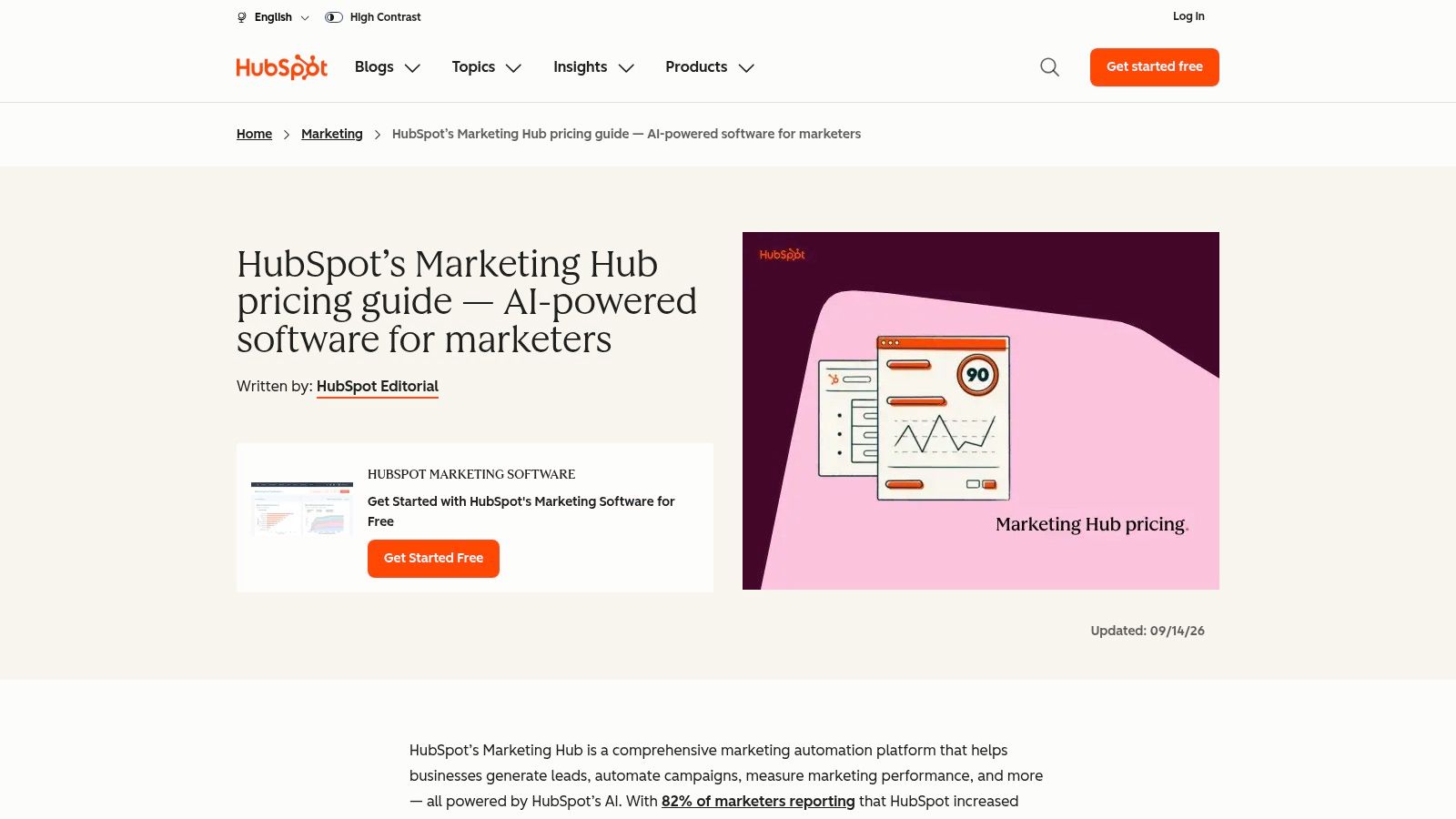
The platform is renowned for its intuitive user interface and extensive educational resources through HubSpot Academy, which significantly lowers the barrier to entry for teams new to CRM and marketing automation. While the free tools are generous, scaling to Professional or Enterprise tiers can become a significant investment, as costs increase with contact list size and feature access. These higher tiers often include mandatory onboarding fees, which is a key budget consideration. However, its native CRM integration and vast app marketplace provide a level of connectivity that few competitors can match for the SMB market.
HubSpot’s pricing is transparent at the entry level but becomes complex and expensive at scale. The free CRM is a major draw, but Professional and Enterprise plans require significant investment, including mandatory onboarding fees. It is best for businesses that prioritize a unified CRM experience and are willing to pay for scalability.
| Pros | Cons |
|---|---|
| Very approachable UI and onboarding | Professional/Enterprise tiers have required onboarding fees |
| Free plan available to start; easy to expand | Costs scale with contacts and seats |
| Large ecosystem and community support | Advanced customization can be limited vs. enterprise-first platforms |
Website: https://blog.hubspot.com/marketing/hubspot-marketing-hub-pricing
Intercom is a conversational engagement suite designed to connect businesses with customers through its messenger, AI-powered bots, and integrated help desk. It specializes in in-app messaging and product tours, making it a powerful tool for SaaS and product-led companies looking to onboard, engage, and support users directly within their platform. Its modern interface and focus on real-time conversations make it one of the best customer engagement platforms for teams prioritizing a direct, personal touch.
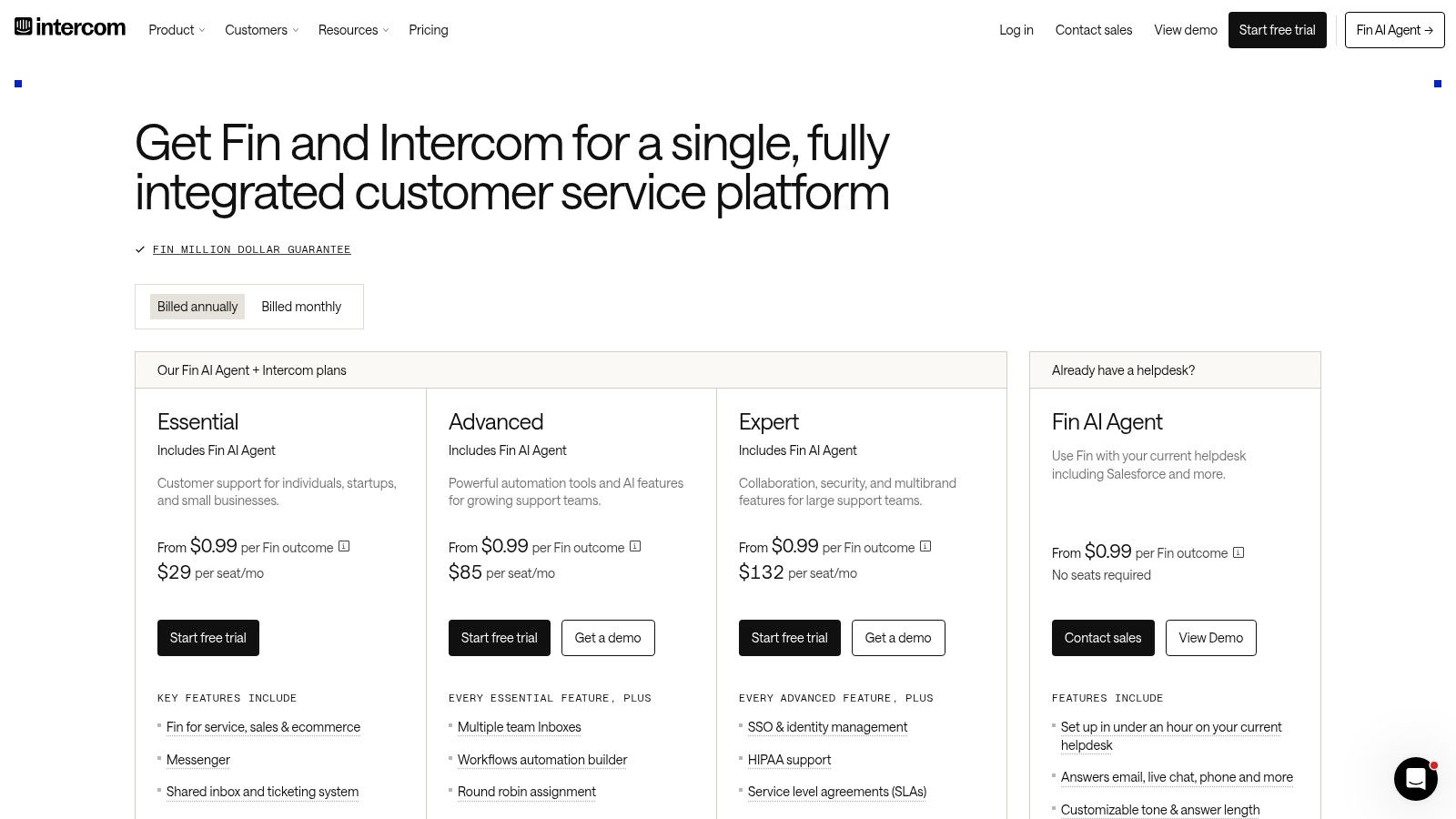
The platform’s strength is its unified nature, combining support, engagement, and conversion tools in one inbox. Features like Fin, its AI Agent, automate resolutions, while outbound campaigns allow for targeted email, SMS, and in-app messages. The pricing model is flexible but can become complex; it starts with a base plan, and key features like the AI Agent, product tours, and phone support are add-ons with usage-based pricing. This modularity allows businesses to scale, but requires careful cost management as usage grows.
Intercom is less suited for broad, multi-channel marketing campaigns focused on SMS or voice outreach. Its strength is squarely in conversational engagement and in-product support. For teams needing extensive omnichannel marketing automation, platforms like Call Loop or Salesforce may be more appropriate.
| Pros | Cons |
|---|---|
| Fast setup with a clean, modern UI | Add-ons and usage-based pricing can increase total cost |
| Flexible usage-based channels and add-ons | Heavier analytics may require exports or BI tools |
| Strong in-product engagement tools | Can be expensive for teams needing the full feature set |
Website: https://www.intercom.com/pricing
Zendesk is a customer service-first engagement platform, widely adopted for its reliable ticketing system and omnichannel support capabilities. It excels at consolidating customer conversations from live chat, email, social media, and voice into a unified agent workspace. This focus on support-led engagement makes it one of the best customer engagement platforms for businesses that prioritize resolving customer issues efficiently and maintaining detailed interaction histories. The platform has evolved to include AI-powered agents and advanced workforce management tools, positioning it as a scalable solution for growing support teams.
Its core strength is the tight integration of various communication channels, allowing agents to manage complex queries without switching contexts. The Sunshine platform offers extensibility, enabling custom apps and integrations, while Sunshine Conversations facilitates rich messaging on platforms like WhatsApp and Facebook Messenger. However, its per-agent pricing model can become costly for larger teams, and accessing advanced features for analytics (via Explore) or complex workflows often requires purchasing higher-tier plans or specific add-ons.
Zendesk’s per-agent pricing is transparent but can scale expensive quickly as support teams grow. Advanced features are often gated in higher tiers, requiring careful evaluation of total cost of ownership. It is best for service-focused organizations that need a mature, scalable ticketing system.
| Pros | Cons |
|---|---|
| Mature, scalable, and trusted platform | Per-agent pricing can be expensive at scale |
| Strong integration marketplace and API | Advanced features are often gated in higher tiers |
| Excellent AI and automation capabilities | Can be complex to configure without dedicated resources |
Website: www.zendesk.com/pricing/
Klaviyo has established itself as a dominant force in the B2C sector, offering a powerful CRM and engagement platform designed specifically for ecommerce brands. It excels at unifying customer data from direct-to-consumer (DTC) storefronts like Shopify and BigCommerce to orchestrate highly targeted email and SMS campaigns. Its data model is built around ecommerce events, making it one of the best customer engagement platforms for online retailers focused on driving revenue through personalized communication.
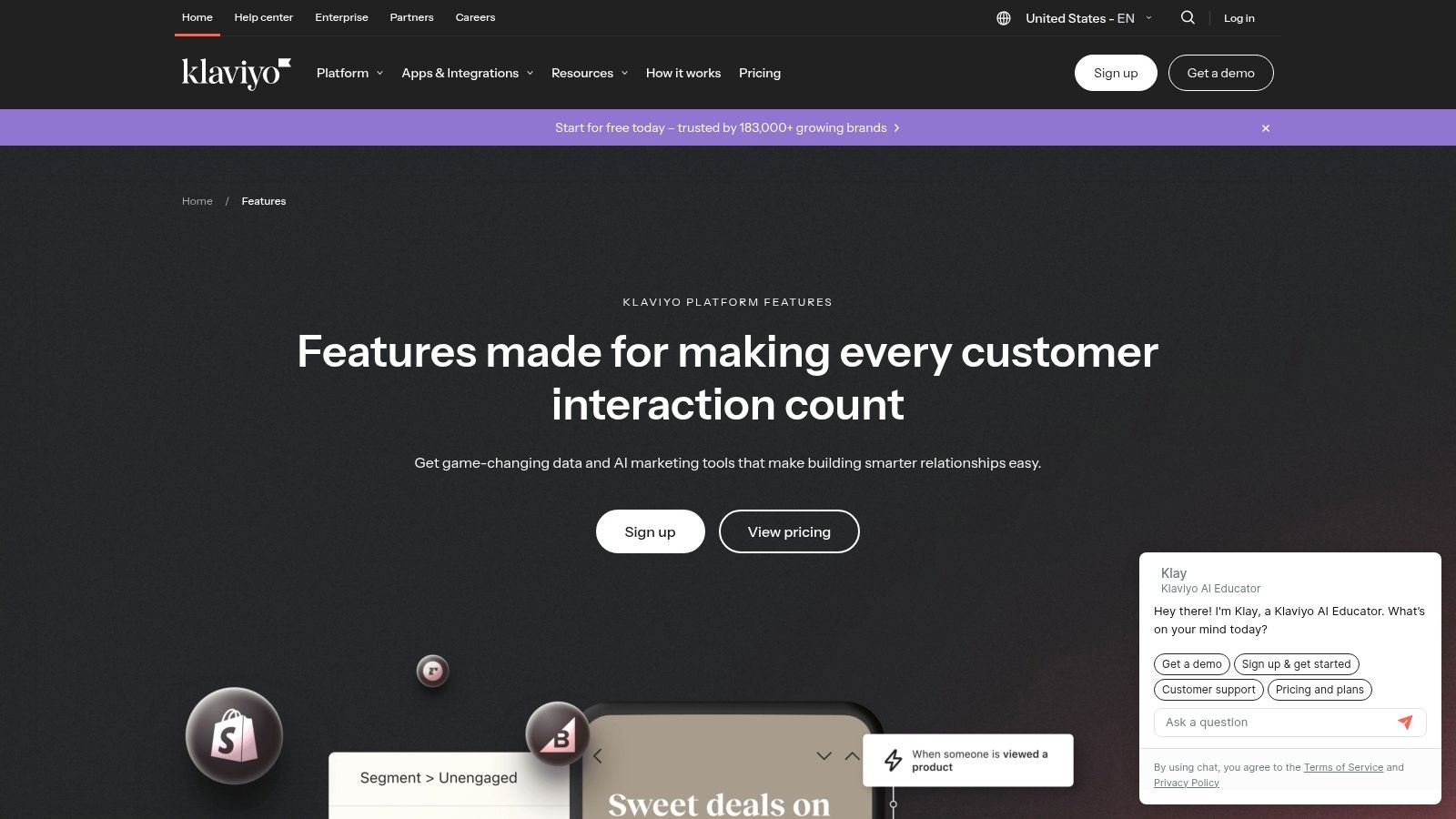
The platform's strength is its rapid time-to-value for DTC merchants. With over 350 pre-built integrations, brands can quickly sync historical data and launch advanced automations like abandoned cart reminders and browse abandonment flows. Klaviyo is also expanding its AI capabilities, introducing tools for predictive analytics, channel affinity, and an AI Customer Agent. The pricing is transparent and usage-based with a free starter tier, but costs for SMS and WhatsApp can fluctuate based on country-specific carrier fees.
Klaviyo is primarily designed for B2C ecommerce. It is less suited for B2B companies, service-based businesses, or organizations needing complex voice or ringless voicemail outreach. Its focus is squarely on email and SMS-driven revenue attribution.
| Pros | Cons |
|---|---|
| Very fast to launch for DTC businesses | Primarily designed for B2C; less suited for B2B |
| Clear usage-based pricing with a free tier | SMS and WhatsApp costs vary by carrier and country |
| Robust benchmarks and reporting for ecommerce | Features may be overly complex for non-retail use cases |
Website: https://www.klaviyo.com/features
SAP Emarsys Customer Engagement is an omnichannel platform specifically designed to accelerate business outcomes for retail and ecommerce brands. It differentiates itself by providing a library of pre-built, industry-specific "tactics" and automated workflows, enabling marketers to launch targeted campaigns such as cart abandonment, post-purchase follow-ups, and loyalty programs without building them from scratch. This focus on packaged, outcome-driven strategies makes it a strong contender among the best customer engagement platforms for mid-market to enterprise retailers seeking rapid time-to-value.
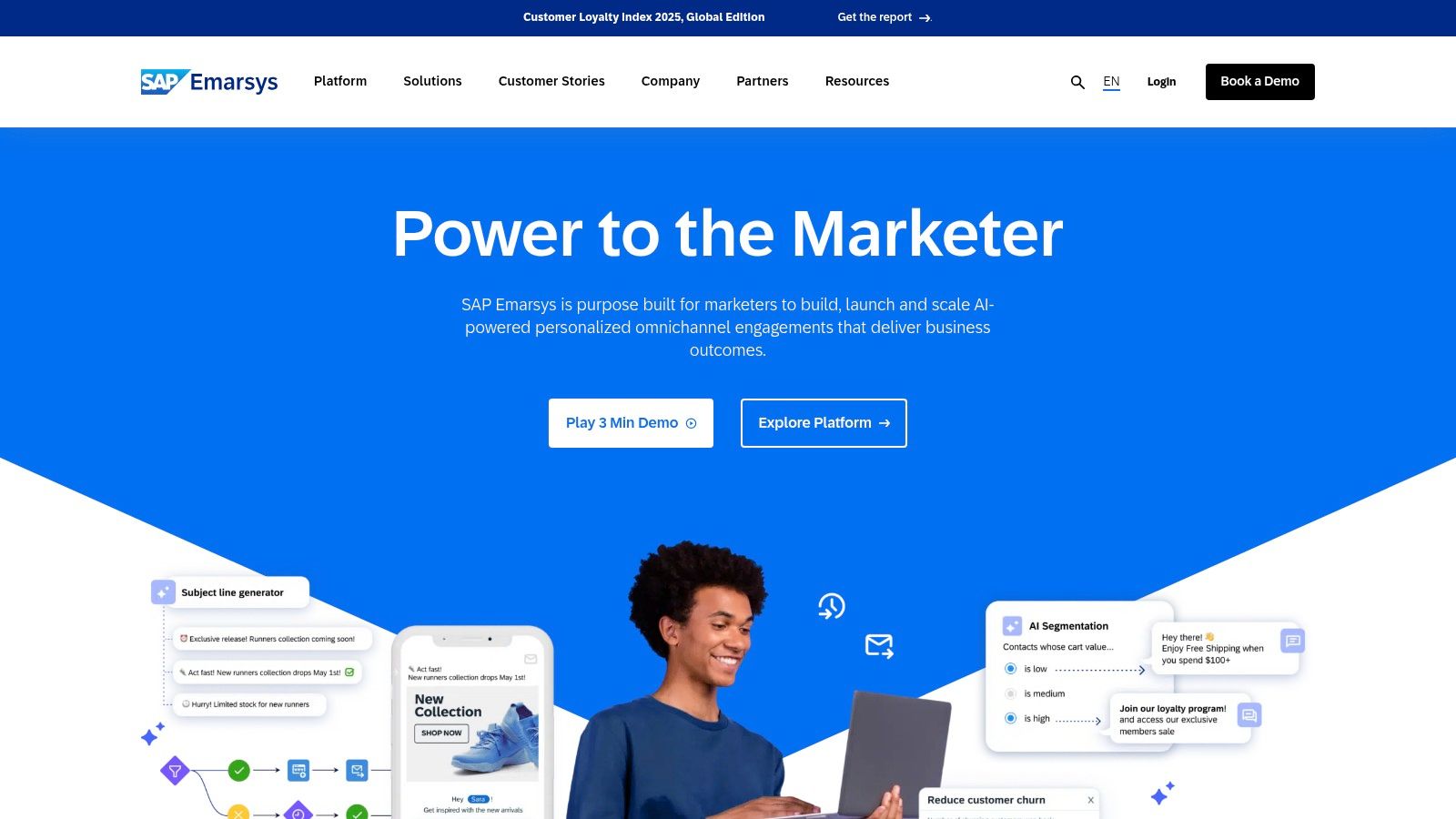
The platform unifies customer data to power personalization across email, SMS, web, mobile app, and digital ads. Its AI-powered features drive product recommendations and lifecycle analytics, giving marketers clear insights into campaign performance and customer behavior. As part of the SAP ecosystem, it offers extensive integrations with other SAP solutions, though it also functions effectively as a standalone product. While its strategic playbooks are a major asset, the pricing is enterprise-oriented and available only by quote, positioning it for companies with significant marketing budgets.
While faster than many enterprise platforms due to its templates, unlocking its full potential, especially with SAP integrations, requires careful data mapping and strategic planning. It is best suited for large retailers already invested in the SAP ecosystem.
| Pros | Cons |
|---|---|
| Outcome-oriented templates accelerate campaigns | Pricing is available by quote and leans toward enterprise |
| Strong focus on retail and ecommerce needs | Some newer channels may be less mature than core offerings |
| Excellent connectivity with the SAP ecosystem | Can be overly complex for non-retail businesses |
Website: https://emarsys.com/
Freshworks delivers an integrated customer service and engagement suite with Freshdesk Omnichannel, designed to unify support conversations across multiple channels. It combines ticketing, live chat, email, voice, and modern messaging into a single agent view, making it a powerful tool for small to mid-sized businesses seeking an approachable yet robust solution. The platform emphasizes ease of setup and value, offering a clear path for companies to scale their support operations without the enterprise-level complexity or cost.

Its core advantage is bringing traditionally separate support functions together, augmented by its Freddy AI capabilities. This includes AI-powered agent assistance and skills-based routing to ensure inquiries are handled efficiently. This combination makes it one of the best customer engagement platforms for teams focused on reactive and proactive customer support. While its entry-level plans are very accessible, businesses should note that advanced customizations, powerful analytics, and deeper workflow automation are typically reserved for the higher-tier plans.
Freshworks offers lower entry pricing with transparent plans, making it an attractive option for SMBs. However, advanced features are often gated, requiring upgrades to higher tiers. It is best for teams that need a solid, affordable support hub without enterprise complexity.
| Pros | Cons |
|---|---|
| Lower entry pricing with transparent plans | Advanced analytics require higher tiers |
| Quick implementation and user-friendly interface | Complex use cases may need additional Freshworks products |
| Good breadth across essential support channels | Customizations can be limited on lower plans |
Website: https://www.freshworks.com/freshdesk/omni/pricing/
Zoho SalesIQ is a real-time messaging and customer engagement platform built for small to mid-sized businesses that want to convert website visitors into leads. It combines live chat, website visitor tracking, chatbots, and analytics into a single, cohesive tool that integrates with the broader Zoho ecosystem, particularly Zoho CRM and Zoho Desk. This makes it a cost-effective solution for teams already using Zoho products to manage their sales and support pipelines.
The platform’s core strength is its ability to provide rich, contextual information about website visitors, allowing agents to initiate proactive, personalized conversations. Its codeless bot builder, Answer Bot, can handle common queries, qualify leads, and book appointments, freeing up human agents to focus on high-value interactions. While it excels at live chat and bot automation for websites and mobile apps, it's less suited for complex, enterprise-level cross-channel journey orchestration compared to more expensive platforms. The pricing is highly competitive, with a generous free plan and affordable paid tiers.
Zoho SalesIQ is less suited for complex enterprise orchestration or businesses outside the Zoho ecosystem. It is a specialized tool for website conversion and live engagement, not a full-fledged multi-channel marketing automation platform.
| Pros | Cons |
|---|---|
| Very competitive pricing with a generous free plan | Less suited for complex enterprise orchestration |
| Deep, native integration with the Zoho ecosystem | Custom branding options may require higher tiers |
| Fast to deploy on websites and mobile apps | Can be less intuitive outside of the Zoho environment |
Website: https://www.zoho.com/salesiq/
| Product | Core channels | Best for | Key strengths (USPs) | Pricing model | Compliance & deliverability |
|---|---|---|---|---|---|
| Call Loop (Recommended) | SMS/MMS, Voice broadcast, Ringless voicemail, Drip sequences | Marketers, sales/agencies, ecommerce, HIPAA-covered healthcare | Unified multi-channel orchestration; ringless pay-per-drop; deep CRM + Zapier integrations; powerful automation | Free trial; ringless billed per successful drop; voice/usage-based; some pricing via Sales | HIPAA support; number validation, DNC, toll-free compliance, double opt-in, link tracking |
| Salesforce Marketing Cloud Engagement | Email, SMS, Push, WhatsApp, real-time journeys | Mid-market → Enterprise tied to Salesforce CRM | Native Customer 360 tie-ins; Einstein AI; enterprise governance & scale | Edition/quote-based (complex packaging) | Strong enterprise governance, permissions, deliverability controls |
| Braze | Email, SMS, Push, In-app, Web | Consumer/mobile-first brands | Real-time messaging, mobile SDKs, Canvas journeys; marketer-friendly UI | Quote / volume-based | Proven high-volume reliability; deliverability tooling |
| Adobe Journey Optimizer | Real-time omnichannel (email, push, SMS, web) | Enterprises using Adobe Experience Cloud | Deep creative/content workflow integration; experimentation & decisioning | Quote-based (requires AEP) | Enterprise-scale profiles & governance |
| Iterable | Email, SMS, In-app, Push, Direct mail | Growth & lifecycle teams | Fast experimentation; warehouse-native data activation; embedded AI | Quote-based (volume/add-ons) | Strong data activation; deliverability tied to setup |
| HubSpot | Email, Automation, Chat, CRM | SMBs scaling into automation | Native CRM, approachable UI, free tier & templates | Free tier; contact/seat-based paid tiers | Standard compliance & deliverability; enterprise options available |
| Intercom | In-app, Email, SMS, WhatsApp, Phone | Product-led SaaS & support teams | Conversational AI agent, product tours, fast setup | Usage-based + add-ons (AI per resolution) | Standard compliance; phone/pay-per-minute options |
| Zendesk | Omnichannel messaging, Voice, Ticketing | Support-led enterprises | Mature platform, AI & workforce management, Sunshine extensibility | Per-agent tiers; add-ons for advanced features | Enterprise controls, strong integrations for compliance |
| Klaviyo | Email, SMS, WhatsApp | Ecommerce / DTC merchants | Ecommerce-centric data model, product recommendations, fast to launch | Usage-based tiers with free starter plan | Ecommerce deliverability focus; carrier costs vary by country |
| SAP Emarsys Customer Engagement | Email, SMS, Push, Web personalization, Ads | Retail & enterprise brands (SAP customers) | Prebuilt tactics/templates, loyalty features, SAP connectivity | Quote-based (enterprise) | Enterprise governance; retail/channel-specific compliance |
| Freshworks – Freshdesk Omnichannel | Messaging, Voice, Ticketing, Chat | SMBs needing support & value pricing | Lower entry pricing, quick implementation, Freddy AI for agents | Transparent plans; lower entry tiers | Standard compliance for support workflows; add-ons for advanced needs |
| Zoho SalesIQ | Live chat, Messaging, Bots, In-app SDK | Small → mid teams, Zoho ecosystem users | Very competitive pricing, fast deployment, tight Zoho CRM integration | Competitive/transparent pricing | Basic compliance & deliverability; good for website/app engagement |
What is the best customer engagement platform for small businesses in 2025?
For SMBs, the best choice depends on your primary need. If you need straightforward SMS, voice, and ringless voicemail outreach with HIPAA compliance, Call Loop is a top contender due to its transparent usage-based pricing. For an all-in-one CRM with marketing automation, HubSpot’s free tier is an excellent starting point. For ecommerce, Klaviyo offers the fastest time-to-value for DTC brands.
How do I choose between Salesforce Marketing Cloud and Braze?
If your organization is invested in the Salesforce ecosystem and needs enterprise-grade governance and data unification, Salesforce Marketing Cloud is the stronger choice despite its complexity and cost. If you prioritize a marketer-friendly UI, rapid experimentation, and mobile-first capabilities for B2C brands, Braze is often more agile and easier to adopt, though its pricing is also quote-based.
Are customer engagement platforms compliant with HIPAA and TCPA?
Not all platforms are. Call Loop explicitly offers HIPAA compliance and strong TCPA features like DNC list management and double opt-in. Salesforce, Adobe, and HubSpot offer enterprise-grade compliance tools, but you must ensure they are configured correctly for regulated industries. Always verify a platform’s compliance offerings before signing contracts, especially for healthcare.
What is the difference between a customer engagement platform and a CRM?
A CRM (like Salesforce or HubSpot) primarily stores and manages customer data and interactions. A customer engagement platform (like Braze or Iterable) focuses on orchestrating personalized, multi-channel marketing campaigns and journeys using that data. Many platforms, like HubSpot, combine both functions, while others specialize in one area.
How important is SMS marketing compared to email in 2025?
SMS marketing remains significantly more effective for immediate attention and action. With a 98% open rate and 45% response rate in 2025, compared to email’s ~6% open rate, SMS is the better channel for time-sensitive alerts, promotions, and reminders. However, email remains vital for longer-form content and nurturing. The best customer engagement software in 2025 offers both, allowing you to choose the right channel for the right message.
Navigating the landscape of the best customer engagement platforms is a strategic investment in your business's future. The right platform aligns perfectly with your operational needs, business model, and growth trajectory. An ecommerce brand’s requirements for abandoned cart sequences differ vastly from a healthcare provider’s need for HIPAA-compliant appointment reminders.
Based on our evaluation, here is a concise shortlist for key buyer personas:
Before committing, evaluate these five factors:
Once you’ve made your choice, begin with a pilot program or a single, high-impact use case, such as automated appointment reminders or a welcome series. This allows your team to learn the platform in a controlled environment and demonstrate early wins. Ensure you have a clear strategy for data migration and integration. A customer engagement platform is only as powerful as the data it can access. Finally, invest in training your team. A powerful tool is useless if no one knows how to operate it effectively.
Ultimately, choosing one of the best customer engagement platforms is about committing to a more connected, responsive, and personalized relationship with your audience. The right tool will not only streamline your workflows, but also create new opportunities to delight your customers and build lasting loyalty.
Ready to enhance your outreach with powerful and direct communication channels? Call Loop provides a straightforward platform for SMS marketing, voice broadcasting, and ringless voicemail drops, making it one of the top customer engagement platforms 2025 for businesses needing to connect instantly. Start your free trial of Call Loop today and see how simple it is to build stronger customer relationships.
| Pros | Cons |
|---|---|
| Unified Multi-Channel Outreach: Manage SMS, voice, and ringless voicemail campaigns from one dashboard. | Pricing Complexity: The pay-per-use model for voice can be difficult to forecast for large campaigns without a sales consultation. |
| Strong HIPAA & TCPA Compliance: A critical advantage for healthcare and regulated industries. | Ringless Voicemail Regulations: Users must be diligent in understanding and complying with regional laws governing ringless voicemail. |
| Deep Integrations: Connects with thousands of apps, making it a flexible addition to any tech stack. | |
| Proven Results: Trusted by over 45,000 users with documented case studies showing significant ROI. |
Chris Brisson
Chris is the co-founder and CEO at Call Loop. He is focused on marketing automation, growth hacker strategies, and creating duplicatable systems for growing a remote and bootstrapped company. Chat with him on X at @chrisbrisson


Trusted by over 45,000 people, organizations, and businesses like


